Shrikhand and malpua are two well-known Indian desserts, but they are made in very different ways. Shrikhand uses thick, strained yogurt, while malpua is linked to an older sweet called apupa.
Both recipes have changed over the years as people used different ingredients and cooking methods in different regions. Their history gives you a simple look at how these traditional sweets slowly took the forms we enjoy today.
The Story Behind Shrikhand
From Shikharini to Modern Shrikhand
Accounts of shrikhand origin often point to shikharini, an earlier preparation made by draining curd and mixing the thickened curd with sugar and spices. Food historian K.T. Achaya dated a similar preparation to around 500 BCE and noted that removing whey from curd resembles today’s method.
Later food books also mention similar dishes. Shikharini is mentioned in the 11th-century Kannada book Lokopakara, while the later Soopa Shastra also describes a similar preparation. These references show that people made strained and sweetened curd dishes at different points in history. However, the ingredients, flavors, and ways of serving them changed with time and place.
Modern shrikhand is usually made with hung curd, sugar, saffron, cardamom, and nuts. The curd is strained until thick and creamy, then mixed with the other ingredients. The result is a chilled dessert with a smooth, creamy texture.
Shrikhand’s Regional and Festive Traditions
Shrikhand is closely associated with Gujarat and Maharashtra, where it is served as a dessert and is also paired with puris. Janmashtami celebrations and weddings are among the occasions when it is commonly served.
Regional recipes have also created different versions of shrikhand. For instance, Amrakhand combines the strained yogurt base with mango pulp. The name shrikhand also has several proposed explanations, but its exact linguistic origin is uncertain.
The History of Malpua
From Vedic Apupa to Malpua
Malpua’s early history is often linked to apupa, a preparation mentioned in the Rigveda. The ancient preparation differed considerably from the syrup-soaked malpua sweet commonly served today. It was made from barley flour, shaped into cakes, fried in ghee or cooked in water, and sweetened with honey.
Over time, the recipe changed because new ingredients and cooking styles were added. Later on, some versions used wheat flour, milk, ghee, and spices like cardamom, pepper, and ginger. Pupalika was an early sweet cake made with rice or wheat and jaggery. Some types of Pupalika were made as stuffed sweets.
Malpua’s Regional and Festival Variations
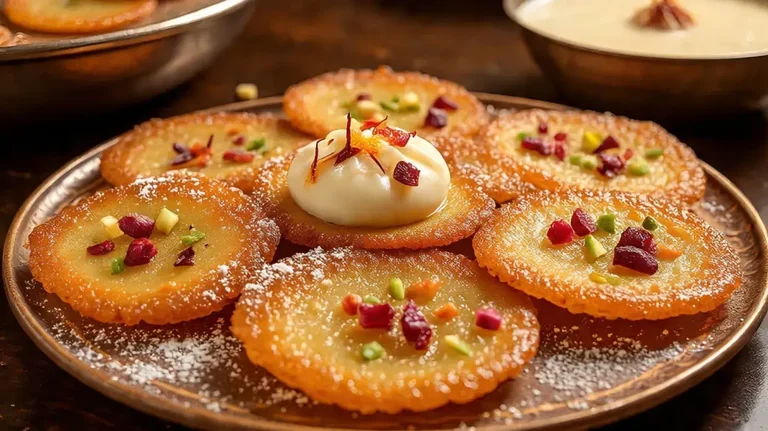
Malpua has no single fixed recipe. In many parts of northern India, people fry wheat-flour batter until golden, soak it in sugar syrup, and serve it with creamy rabdi. This dish is closely associated with Holi, although it is also prepared during Diwali and Ramadan.
Different regions have their own special ways of making and using malpua. In Odisha, malpua is called amalu and is offered in the Jagannath Temple as part of the religious rituals.
In West Bengal, people often make it during winter, especially during the festival of Makar Sankranti. In some Maithil homes, people serve malpua along with spicy meat dishes during Holi.
Conclusion
If you have enjoyed shrikhand or malpua sweet before, you now know these sweets have more to them than taste. Both have long histories, and their recipes have changed from place to place. If you have never tried them, it is worth tasting both when you get the chance.